

What Causes Bathroom Drain Blockages And How To Prevent Them
Bathroom drain blockages do not happen overnight. They build up slowly, often caused by everyday habits you might not even notice. From loose hair slipping down the shower drain to soap residue quietly sticking to pipe walls; these small repeated actions gradually create stubborn clogs that disrupt water flow.
Over time, water starts as a minor slowdown can turn into a completely blocked drain, leading to unpleasant odours, water backup and unnecessary stress. Whether you are keeping up with regular home maintenance or preparing for guaranteed end of lease cleaning Canberra, understanding the root causes of these blockages can help you stay one step ahead. This article will let you know what causes bathroom drain blockages and how to prevent them. With a few meaningful changes and preventive steps, maintaining clean and free flowing bathroom drains becomes much easier.
Hide
Show
- How Does Hair Buildup Cause Bathroom Drain Blockages?
- Why Soap Scum Leads to Bathroom Drain Clogs?
- How Tiny Objects Block Bathroom Drains?
- Impact of Hard Water Deposits on Bathroom Drains
- How Poor Maintenance Causes Bathroom Drain Blockages?
- How Grease and Bathroom Products Clog Drains?
- Infographic For Tips To Prevent Bathroom Drain Blockages
- Wrapping Up
1. How Does Hair Buildup Cause Bathroom Drain Blockages?
Hair is one of the most common causes of bathroom drain blockages, especially in showers and sinks. Strands of hair easily go down the drain during showers or grooming routines and begin to collect over time. When combined with soap residue and dirt, they form thick clumps that restrict water flow.
The challenge with hair blockages is that they develop gradually, making them easy to ignore at first. By the time you notice slow drainage, the clog is often already significant. Using a drain cover to catch hair and cleaning it regularly can prevent buildup and keep your drains functioning properly.
2. Why Soap Scum Leads to Bathroom Drain Clogs?
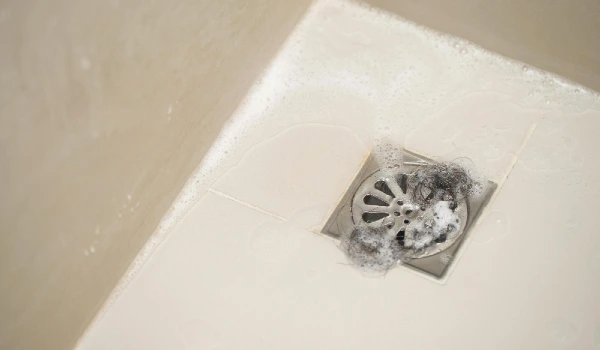
Soap may seem harmless, but it plays a major role in clogging bathroom drains. Traditional soap bars contain fats that react with minerals in water to form soap scum, a sticky substance that clings to the inside of pipes. Over time, this residue narrows the pipe and traps other debris.
Switching to liquid soap or soap free alternatives can help reduce this problem. Regularly flushing your drains with hot water also helps break down minor buildup before it turns into a blockage. This simple habit can be especially useful during deep cleaning routines like end of lease cleaning Canberra.
3. How Tiny Objects Block Bathroom Drains?
Bathroom drains often get clogged due to small objects that accidentally get washed down. Items like cotton buds, dental floss, tissues or even small bits of packaging can easily slip into the drain and get stuck in the pipes.
These objects do not dissolve and can quickly create a base for other debris to accumulate. The best way to prevent this is by being mindful of what goes down your drain. Keeping a small bin in your bathroom and disposing of waste properly can go a long way in avoiding unnecessary blockages.
4. Impact of Hard Water Deposits on Bathroom Drains
Hard water contains minerals like calcium and magnesium that can build up inside your pipes over time. These mineral deposits stick to the inner walls of the pipes and gradually reduce the space available for water to pass through.
This type of blockage is harder to detect early, but can significantly affect water flow if ignored. Using natural cleaning solutions like vinegar can help break down minor deposits. In the long run, installing a water softener can be a practical solution to prevent recurring issues.
5. How Poor Maintenance Causes Bathroom Drain Blockages?
One of the biggest reasons for blocked bathroom drains is a lack of regular maintenance. When drains are not cleaned routinely, even small amounts of debris can build up over time and eventually turn into a serious blockage. Ignoring early signs like slow drainage or mild odours often leads to bigger plumbing issues later, especially during end of lease cleaning Canberra inspections. Creating a simple maintenance routine can make a big difference. Here are a few easy habits to follow:
- Pour hot water down the drain once a week to clear minor buildup.
- Use natural cleaners, like baking soda and vinegar.
- Remove and clean drain covers regularly.
- Check for early signs of slow drainage, and act quickly.
- Avoid letting debris accumulate over time.
6. How Grease and Bathroom Products Clog Drains?
While grease is commonly associated with kitchen drains; bathroom products like oils, conditioners, and lotions can also contribute to blockages. These substances may seem harmless when washed down, but they can stick to pipe walls and trap other debris.
Over time, this buildup hardens and restricts water flow. To avoid this, try to minimise the amount of oily or heavy products going down the drain. Wiping off excess product before rinsing and choosing water soluble alternatives can help keep your pipes cleaner.
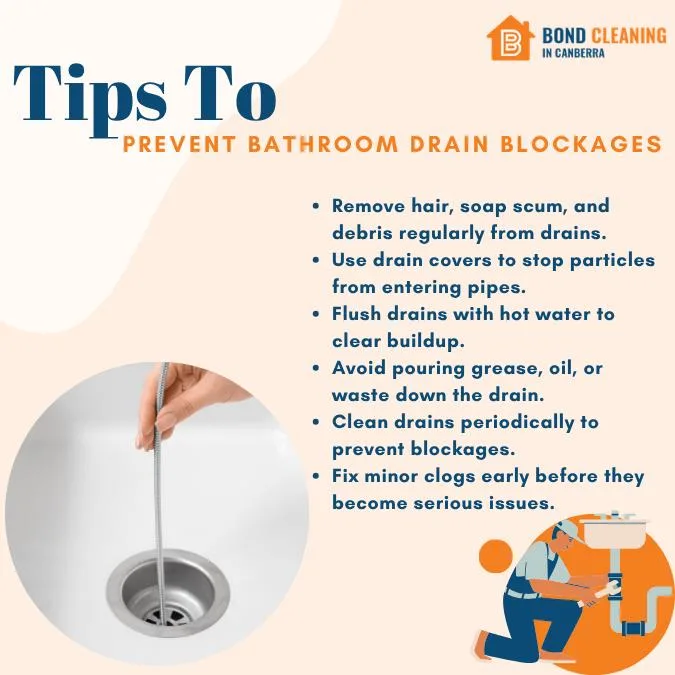
Infographic For Tips To Prevent Bathroom Drain Blockages
Wrapping Up
Bathroom drain blockages are a common but preventable problem. Most clogs are caused by everyday habits that often go unnoticed until they start affecting your routine. By understanding these causes and making small changes to your daily habits, you can avoid most drainage issues. Regular maintenance and mindful usage not only keep your bathroom in top condition but also make intensive cleaning tasks much easier and stress free.