

The Science Of Cleaning: Understanding Cleaning Products
Keeping a home clean is not just about appearance. Cleaning plays a major role in maintaining hygiene, improving indoor air quality and creating a healthier living environment. From kitchen counters to bathroom tiles; every surface collects dirt, grease, bacteria and dust over time. This is where cleaning products come into the picture. But have you ever wondered how these products actually work?
This article will help you understand the science behind cleaning products. It is surprisingly fascinating. Different products are designed to tackle different types of dirt and stains using chemical reactions and specialised ingredients. Whether you are doing regular household chores or preparing a rental property for inspection through quality end of lease cleaning Canberra services, understanding cleaning products can help you clean more effectively and safely.
Hide
Show
- What Are Cleaning Products Made Of?
- How Do Cleaning Products Remove Dirt?
- Why Different Surfaces Need Different Cleaners
- Understanding Disinfectants and Sanitisers
- The Role of pH in Cleaning Products
- Are Natural Cleaning Products Effective?
- Safety Tips When Using Cleaning Products
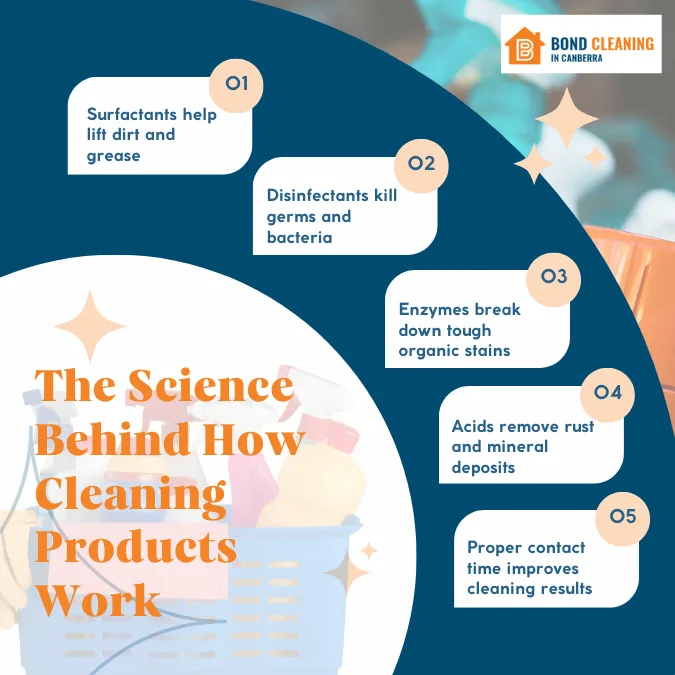
- Infographic: The Science Behind How Cleaning Products Work
- Wrapping Up
1. What Are Cleaning Products Made Of?
Cleaning products contain a combination of chemicals that work together to remove dirt, stains, grease and germs. The most common ingredients include surfactants, solvents, acids, alkalis, fragrances, and disinfectants. Each ingredient serves a specific purpose depending on the type of cleaning required.
Surfactants are one of the most important ingredients in cleaning products. They help loosen dirt and oil from surfaces so they can be washed away with water. Solvents dissolve stubborn grease and stains, while acids are commonly used to remove mineral deposits and rust. Alkaline ingredients are effective against grease and organic matter, making them ideal for kitchen cleaners.
2. How Do Cleaning Products Remove Dirt?
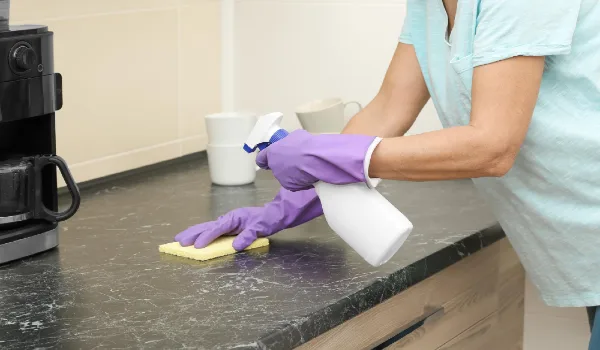
Cleaning products work by breaking the bond between dirt and the surface. Dirt often sticks to surfaces because of oils, grease, or static attraction. Cleaning agents weaken these bonds and lift the dirt away so it can be wiped or rinsed off easily.
For example, when soap or detergent is mixed with water; the surfactants surround grease particles and trap them in tiny structures called micelles. These micelles allow grease and dirt to mix with water and wash away. This scientific process explains why plain water alone is often not enough to clean oily or sticky surfaces properly.
3. Why Different Surfaces Need Different Cleaners
Not all surfaces can be cleaned with the same product. Using the wrong cleaner may damage the surface or leave poor results. Professional end of lease cleaning Canberra services use different products for different areas to achieve better cleaning results safely.
Here are some examples:
- Glass cleaners help remove marks without leaving streaks.
- Wood cleaners protect the surface and polish.
- Bathroom cleaners remove soap scum and hard water stains.
- Kitchen cleaners cut through grease and oil easily.
- Carpet cleaners help remove stains without damaging fabric.
- Steel cleaners keep appliances shiny and scratch free.
4. Understanding Disinfectants and Sanitisers
Many people confuse cleaning with disinfecting, but they are not the same thing. Cleaning removes dirt and impurities from surfaces, while disinfecting kills bacteria, viruses, and germs. A surface can look clean but still contain harmful microorganisms.
Disinfectants contain active ingredients like bleach, hydrogen peroxide, or alcohol that destroy germs at a microscopic level. Sanitisers reduce the number of germs to safer levels but may not kill all bacteria or viruses completely. In kitchens and bathrooms, using proper disinfectants is especially important for maintaining hygiene and preventing the spread of illness.
5. The Role of pH in Cleaning Products
The pH level of a cleaning product determines how acidic or alkaline it is. Products with different pH levels are designed for different cleaning tasks. Understanding this helps explain, why certain cleaners work better on specific stains or surfaces.
Acidic cleaners are effective at removing mineral deposits, rust and hard water stains commonly found in bathrooms. Alkaline cleaners work best on grease, oils, and food stains in kitchens. Neutral cleaners are gentler and suitable for delicate surfaces like marble or hardwood floors. Choosing the right pH balanced cleaner improves cleaning results and protects surfaces from damage.
6. Are Natural Cleaning Products Effective?
Natural cleaning products have become increasingly popular because they are considered safer for the environment and indoor air quality. Ingredients like vinegar, baking soda, lemon, and essential oils are commonly used as eco friendly alternatives to harsh chemicals.
While natural products can be effective for light cleaning and deodorising, they may not always provide the same level of disinfecting power as commercial products. For heavy duty cleaning tasks, such as grease removal, mould treatment, or professional end of lease cleaning Canberra, stronger commercial grade cleaners are often more effective. The key is finding the right balance between safety, sustainability, and cleaning performance.
7. Safety Tips When Using Cleaning Products
Cleaning products can contain strong chemicals, so it is important to use them carefully. Follow these simple safety tips:
- Read the label before using any product.
- Do not mix different cleaning products together.
- Wear gloves while cleaning.
- Keep windows open for fresh air.
- Store products away from children and pets.
- Use only the required amount.
- Wash surfaces properly after cleaning.
- Dispose of empty bottles safely.
Infographic: The Science Behind How Cleaning Products Work
Wrapping Up
Cleaning products are more than just household essentials. They are carefully formulated solutions designed to remove dirt, grease, stains, and germs through scientific processes. Understanding how these products work can help you choose the right cleaner for every task and use them more safely and effectively. A smarter approach to cleaning not only saves time and effort but also creates a cleaner, healthier, and more comfortable living space.